Book
The Glass Bead Game
★★★★☆
July 11, 2026 · by Gavin Pierce
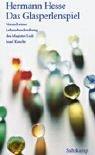
Hesse never actually explains what the glass bead game is, not in any mechanical sense, and by the end I’d made my peace with that. It’s less a game and more a kind of meditation practice dressed up as intellectual competition, synthesizing music, mathematics, philosophy into structured play, and the vagueness feels deliberate rather than lazy, since the book is really about the pursuit of a life dedicated to pure thought, not about rules I could actually follow at a table.
Joseph Knecht’s rise through Castalia, the isolated academic order at the center of the book, reads a little like Hogwarts for intellectuals if you strip out any actual magic or plot urgency, replaced instead with long, patient debates between Knecht and his peers about the value of a life spent entirely inside the mind. I kept a running page in my own notebook of words and references I didn’t recognize, which one reviewer mentioned doing too, and there’s something fitting about a book on rigorous intellectual devotion demanding that same devotion from the reader just to keep up.
Where it tests patience is structural. There’s very little plot for long stretches, the narrator is openly a lesser scholar guessing at Knecht’s inner life rather than an omniscient voice, and the ending arrives abruptly, almost mid-thought, before the book tacks on three shorter pieces as Knecht’s posthumous writing. I understand why some readers find that anticlimactic. I found it oddly true to the book’s whole thesis, that a life spent this way doesn’t resolve into a tidy narrative arc.
Four stars. Slow, demanding, genuinely rewarding if you’re willing to sit with long philosophical stretches, and I’m glad I let it sit on my shelf a few years before finally picking it up, I don’t think younger me would’ve had the patience for it.